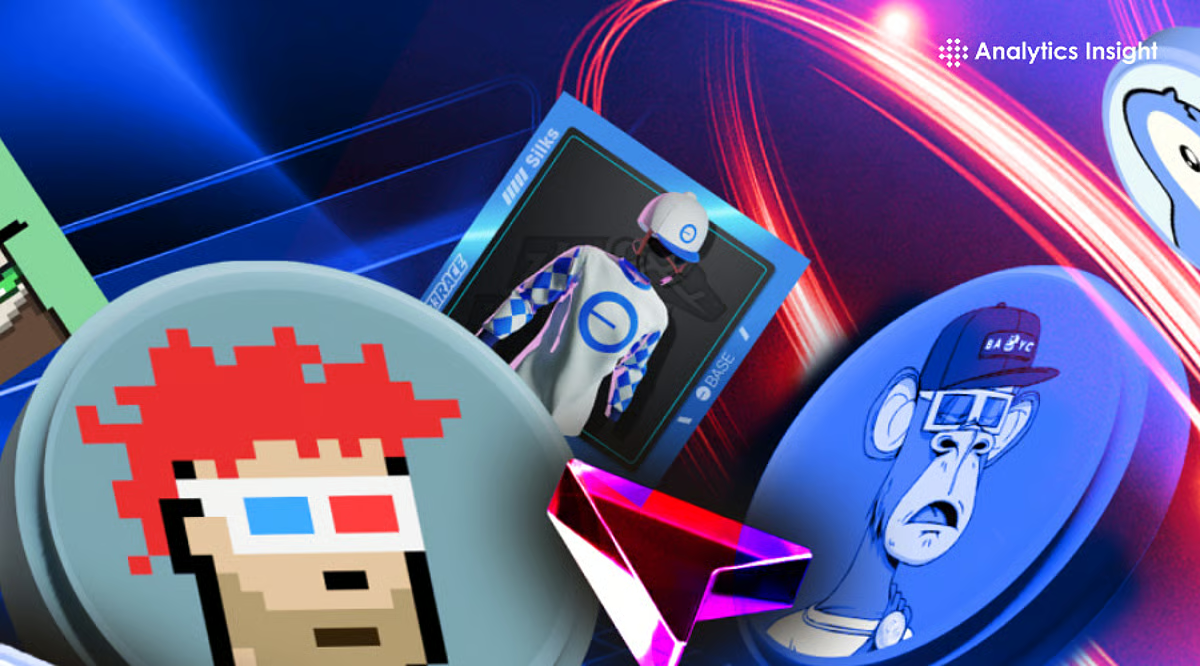
Non-Fungible Tokens (NFTs) exploded in popularity in 2021–2022, reaching massive hype across art, gaming, and digital collectibles. However, after the initial boom, the market cooled down significantly, leading many people to ask an important question in 2026:
Are NFTs a dead trend, or are they quietly becoming the next big opportunity?
The answer is more complex than simply “dead” or “alive.” NFTs have not disappeared—instead, they are evolving from speculative assets into real-world digital infrastructure.
What Happened to NFTs After the Hype?
During the peak of NFT mania, digital art pieces sold for millions of dollars, and thousands of new projects launched overnight. However, many of these projects lacked utility and long-term vision.
As a result:
- Prices dropped significantly
- Many low-quality projects disappeared
- Investor interest shifted toward AI and Web3 infrastructure
This created the impression that NFTs were “over.” But in reality, the hype phase ended—not the technology.
NFTs in 2026: A New Phase of Utility
In 2026, NFTs are no longer just profile pictures or collectibles. They have transformed into functional digital assets with real-world use cases.
Instead of speculation, the focus is now on:
- Ownership
- Authentication
- Access control
- Digital identity
NFTs are becoming a core part of the decentralized internet.
1. NFTs in Gaming: True Digital Ownership
One of the strongest surviving use cases for NFTs is gaming.
Modern blockchain games now use NFTs to represent:
- In-game items (weapons, skins, characters)
- Virtual land and assets
- Player achievements
Unlike traditional games, players truly own their assets and can trade them freely across platforms.
This shift is creating a player-owned economy, where time and effort have real financial value.
2. NFTs in Real-World Assets (RWA)
A major trend in 2026 is the tokenization of real-world assets.
NFTs are now being used to represent:
- Real estate ownership
- Luxury goods authentication
- Event tickets
- Academic certificates
For example, a property title can be stored as an NFT, making transfers faster, more transparent, and fraud-resistant.
This is one of the most powerful real-world applications of NFT technology.
3. NFTs for Digital Identity
Another growing use case is decentralized identity.
Instead of relying on centralized platforms, users can store identity data using NFTs:
- Login credentials
- Digital passports
- Membership access
- Online reputation systems
This gives users more control over their personal data and reduces dependency on traditional systems.
4. NFTs in Music and Content Creation
Artists and creators are now using NFTs to monetize their work directly.
In 2026, NFTs allow:
- Musicians to sell albums directly to fans
- Creators to earn royalties automatically
- Exclusive content access for supporters
This removes middlemen and gives creators more control over their revenue.
5. NFTs in Membership and Communities
One of the most practical uses of NFTs today is access control.
NFTs are being used as:
- VIP membership passes
- Subscription keys
- Event access tickets
- Private community entry tokens
Instead of usernames and passwords, ownership of an NFT can grant access to exclusive platforms or services.
Why NFTs Failed (or Slowed Down) Initially
NFTs didn’t fail as a technology—they failed in execution during the hype cycle.
Key problems included:
- Over-speculation and price manipulation
- Lack of real utility
- Too many low-quality projects
- Weak long-term planning
Once speculation faded, only strong use cases survived.
Why NFTs Still Matter in 2026
Despite criticism, NFTs remain important because they solve real problems:
1. Proof of Ownership
NFTs provide transparent and verifiable ownership of digital and physical assets.
2. Transparency
All transactions are recorded on the blockchain, reducing fraud and duplication.
3. Programmability
Smart contracts allow NFTs to include royalties, access rules, and automation.
4. Interoperability
NFTs can be used across multiple platforms, games, and ecosystems.
Challenges NFTs Still Face
Even in 2026, NFTs are not perfect. Several challenges remain:
- Scalability issues on some networks
- Regulatory uncertainty in some countries
- Security risks and scams
- User experience complexity for beginners
For NFTs to reach mass adoption, platforms must become simpler and more secure.
The Future of NFTs
The future of NFTs is not about digital art hype—it is about invisible infrastructure powering the digital economy.
Experts predict NFTs will increasingly blend into:
- Banking systems
- Education certificates
- Gaming ecosystems
- Social media platforms
- Government digital IDs
Most users may not even realize they are using NFTs in the background.
Final Verdict: Dead Trend or Big Opportunity?
So, are NFTs dead in 2026?
No—they are evolving.
NFTs as speculative collectibles may never return to their peak hype, but NFTs as technology are becoming more important than ever.
The real opportunity now lies in:
- Building NFT-based applications
- Using NFTs for real-world utility
- Integrating NFTs with AI, gaming, and identity systems
In short, NFTs are no longer a trend—they are becoming infrastructure.
Conclusion
NFTs in 2026 are entering a mature phase. The hype is gone, but the innovation is still growing. Like the early internet, NFTs are transitioning from speculation to utility.
Those who understand this shift early will be best positioned to benefit from the next wave of Web3 innovation.

